
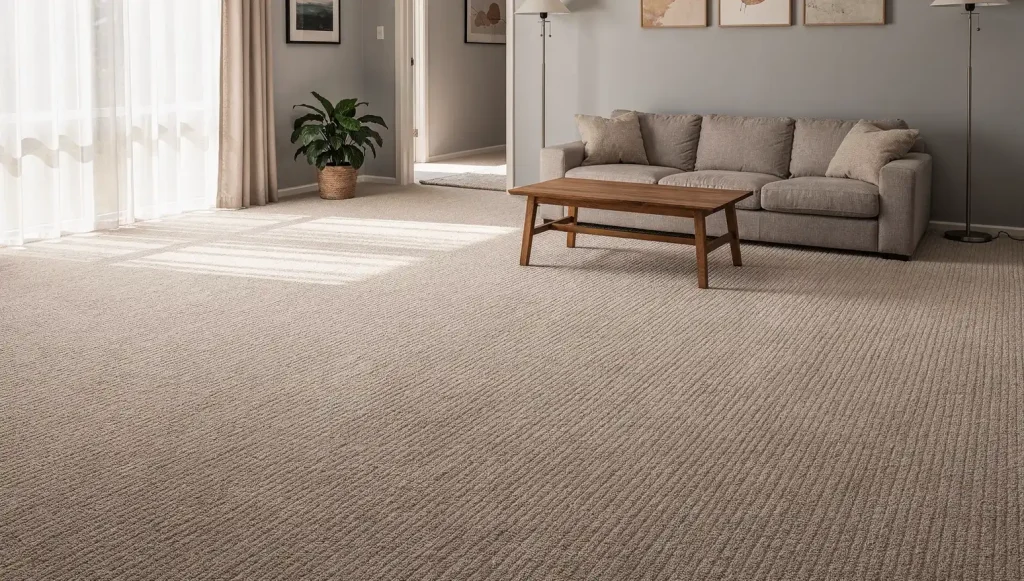
Run your hand across two different carpets and you will often feel the difference straight away. One might be springy and warm, another cool and slick. That difference comes down to the fibre, and getting the types of carpet fibers explained clearly matters, because the fibre you have determines how your carpet handles traffic, spills and the day-to-day life of a busy household. A good carpet cleaning company tailors its treatment to the fibre in front of it, rather than applying a one-size-fits-all approach that could dull, shrink or damage the pile.
Below we break down the four fibres you are most likely to find in Australian homes, how each behaves, and how to work out which one you have.
Wool: The Natural Fibre
Wool is the classic natural carpet fibre, prized for its softness, warmth and depth of colour. It feels wonderful underfoot and tends to age gracefully, resisting crushing in a way many synthetics cannot. Its natural structure also helps it hold dye richly, so wool carpets often look deeper and more luxurious.
The trade-off is that wool needs careful handling. It is sensitive to harsh chemicals, high heat and over-wetting, which can cause shrinkage or felting. Spills should be addressed gently and promptly, and wool responds best to measured, low-moisture care rather than aggressive scrubbing. In short, it is durable and long-lasting when treated with respect.
Nylon: The Hard-Wearing Synthetic
Nylon is the workhorse of synthetic fibres. It is resilient, bouncing back from foot traffic well and holding its shape over time, which makes it a popular choice for hallways, stairs and other high-traffic areas around the home.
On its own, nylon is absorbent and can take up stains, so most nylon carpet comes with a stain-resistant treatment applied during manufacture. That treatment is effective but not permanent, and it can wear thinner over the years. Nylon generally responds well to professional cleaning and tolerates water better than wool, though prompt attention to spills still protects it best.
Polyester: The Soft, Stain-Resistant Choice
Polyester is loved for its softness and its vivid, fade-resistant colours. It has a natural resistance to water-based stains, which gives it an advantage when it comes to spilled drinks and everyday accidents. For bedrooms, lounges and lower-traffic spaces, it offers a plush feel and strong value.
Where polyester falls short is under heavy, constant traffic. The fibres can flatten and matt over time in busy zones, losing their fresh look sooner than nylon would. It also has a tendency to attract oily soils, which can build up and dull the appearance if not cleaned properly. Chosen for the right room, though, polyester performs well and keeps its colour for a long time.
Polypropylene (Olefin): Moisture and Stain Tolerance
Polypropylene, also known as olefin, is highly resistant to moisture and to water-based stains, since the fibre barely absorbs water at all. That makes it well suited to busy rooms, rumpus areas and spots where spills are frequent. It is also colourfast and cleans up easily after many common accidents.
The catch is durability. Polypropylene is softer and less resilient than nylon, so it crushes and shows wear patterns in high-traffic lanes more quickly. It is also prone to holding oily residues. It is a sensible, practical choice for the right setting, but it is not the fibre to pick where you need maximum longevity.
How to Identify the Fibre in Your Carpet at Home
If you are unsure what your carpet is made from, there are a few safe ways to narrow it down:
- Check the paperwork. The original invoice, warranty card or a label on the back of an offcut often names the fibre directly.
- Feel the pile. Wool tends to feel soft, warm and slightly textured. Polyester feels silky, polypropylene feels waxier and more slick, and nylon sits somewhere in between with a springy resilience.
- Look at the recovery. Press a footprint into the pile. Fibres that spring back quickly lean towards nylon or wool, while those that stay flat point more towards polyester or polypropylene.
- Ask a professional. A fibre burn test can confirm the material, but it carries a real risk of damage and should be left to someone who does it routinely. There is no need to experiment on your own carpet.
If you still cannot be sure, a cleaning technician can identify the fibre quickly and safely before any treatment begins.
Matching Fibre Type to the Room
Choosing the right carpet comes down to matching the fibre to how the space is actually used. Consider three things: traffic, moisture and lifestyle.
For high-traffic routes such as hallways and stairs, a resilient fibre like nylon or well-made wool holds up best over time. For cosy bedrooms and formal lounges, the softness and colour of polyester shines without the constant wear. For busy family or activity rooms where spills are common, polypropylene’s moisture tolerance earns its place, provided you accept it will not last as long in the busiest lanes.
Lifestyle matters too. Pets, young children and the general bustle of a home all influence how quickly a fibre shows its age. Understanding how carpet fibres behave also helps explain how they hold everyday soil and other particles, which ties into why carpets trap allergens and dust mites in the first place.
Caring for the Fibre You Have
There is no single “best” carpet fibre. Each one has strengths and limits, and the right choice depends on the room and the way you live. What matters most once a carpet is down is matching its care to its fibre. Wool asks for a gentle hand, nylon and polyester respond to different treatments, and polypropylene needs attention to oily residues.
Knowing your fibre helps you make smarter decisions and get the best result from professional cleaning. Fibre-aware treatment keeps colours true, protects the pile and extends the life of your carpet, which is the simplest way to look after the investment already underfoot in your home.