
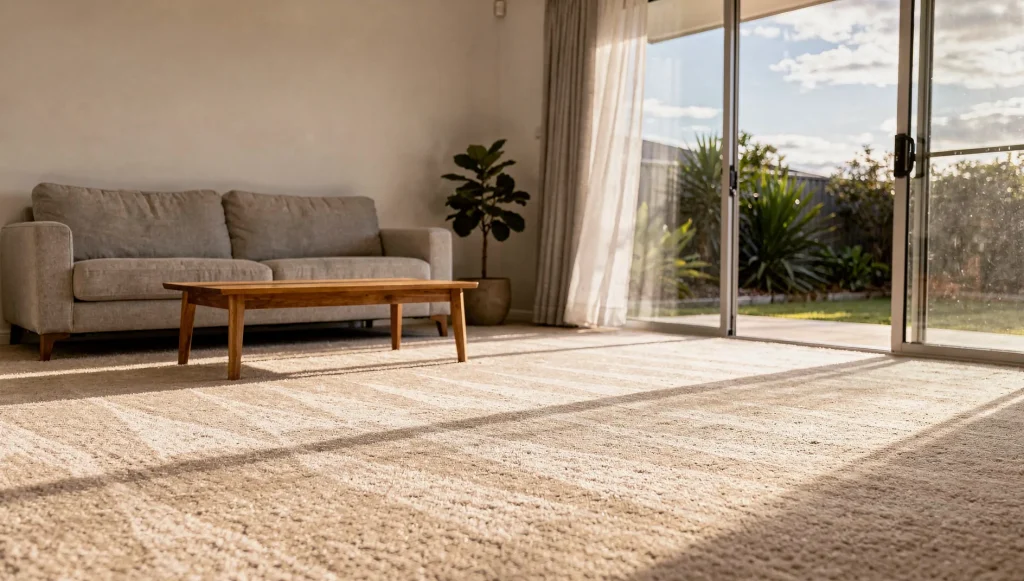
Most carpets dry within a general window of a handful of hours after a steam clean, though that figure moves around more than many people expect. Bunbury’s coastal setting, with its sea breezes, humid stretches and damp winters, can either shorten or lengthen that timeline depending on the day. A professional carpet cleaning service plans for this as part of the job, extracting as much moisture as possible and advising on ventilation so you’re not left guessing how long your floors stay wet.
There is no single fixed number, and anyone who promises one is simplifying things. Understanding the factors at play helps you set realistic expectations and get back to walking on your carpets sooner.
What a Realistic Drying Window Looks Like
After hot water extraction, often called steam cleaning, carpets commonly feel dry to the touch within a few hours and fully dry across most of a day. The method works by injecting heated water and solution into the fibres, then drawing the moisture and loosened soil straight back out with a powerful vacuum.
The amount of water left behind depends heavily on how thorough that extraction pass is. A strong final vacuum removes far more moisture than a rushed one, which is why professional equipment tends to leave carpets drier than a hired machine. Even then, the remaining dampness has to evaporate, and that part depends on the air around it.
How Bunbury’s Climate Affects Drying Time
Air that is already carrying a lot of moisture struggles to absorb more, so humidity is the single biggest local factor. On a humid Bunbury day, evaporation slows and carpets stay damp for longer, even when the temperature feels warm.
Season makes a clear difference here:
- Summer: Warm temperatures and drier air speed up evaporation, and carpets often dry near the faster end of the window.
- Winter: Cooler, damp conditions and frequent rain slow things down, and the same carpet can take noticeably longer to dry.
- Coastal air flow: A steady sea breeze helps move moist air out of a room, so an open window on a breezy day can work in your favour.
Key Factors That Speed Up or Slow Down Drying
Climate aside, the carpet itself and the room it sits in both matter. A few things consistently change how long moisture lingers:
- Fibre and material type: Synthetic fibres such as nylon and polyester release water quickly, while wool and denser natural materials hold moisture and dry more slowly.
- Carpet thickness and pile: Thick, plush carpet holds more water than a low, flat pile, so it takes longer to dry.
- Water and soil removed: The more moisture and dirt the extraction removes, the less is left to evaporate.
- Airflow in the room: A room with good circulation dries far faster than a closed, still space.
How the Cleaning Method Changes Dry Time
Not every approach leaves the same amount of water behind. Hot water extraction uses more moisture during the process, which is part of why it cleans deeply, and that generally means a longer dry time than low-moisture methods.
Low-moisture and some lighter-chemical approaches use less water overall and can leave carpets ready to use sooner. If a quick dry time is a priority, it is worth discussing the options, including lower-chemical cleaning methods, with whoever cleans your carpets so the method suits both the fibre and your schedule.
Practical Ways to Reduce Drying Time at Home
Once the cleaner has finished, the biggest lever you have is airflow. Moving air carries evaporated moisture away and lets more escape from the fibres. A few simple steps make a real difference:
- Open windows on dry or breezy days to let coastal air flow through the room.
- Run ceiling or standing fans aimed across the carpet surface.
- Use air conditioning, which both warms and dries the air, especially useful on humid days when opening windows won’t help.
- Keep interior doors open so air can circulate between rooms.
- Leave high-traffic areas clear so nothing traps moisture against the carpet.
On a damp winter day, closing the windows and running the air conditioner or heating gently is often more effective than letting humid outside air in.
Using Carpets Safely After Cleaning
Walking on damp carpet pulls dirt from your shoes and bare feet straight into fibres that are still open and vulnerable, which can lead to fast re-soiling. It is best to stay off freshly cleaned carpet until it feels dry, and to keep foot traffic light for the first stretch after that.
Hold off on replacing heavy furniture until the carpet is fully dry. Furniture feet can leave marks or trap moisture underneath, and metal or wood resting on damp fibres can cause staining. If you must cross the area, clean socks or protective coverings help keep soil out.
Drying time is only one piece of keeping carpets healthy. When carpets dry slowly, feel stubbornly damp or carry a lingering odour, that can hint at deeper soil build-up or trapped moisture beneath the surface. Learning to spot the early warning signs that carpets are overdue for attention helps you act before small issues settle in for good.