
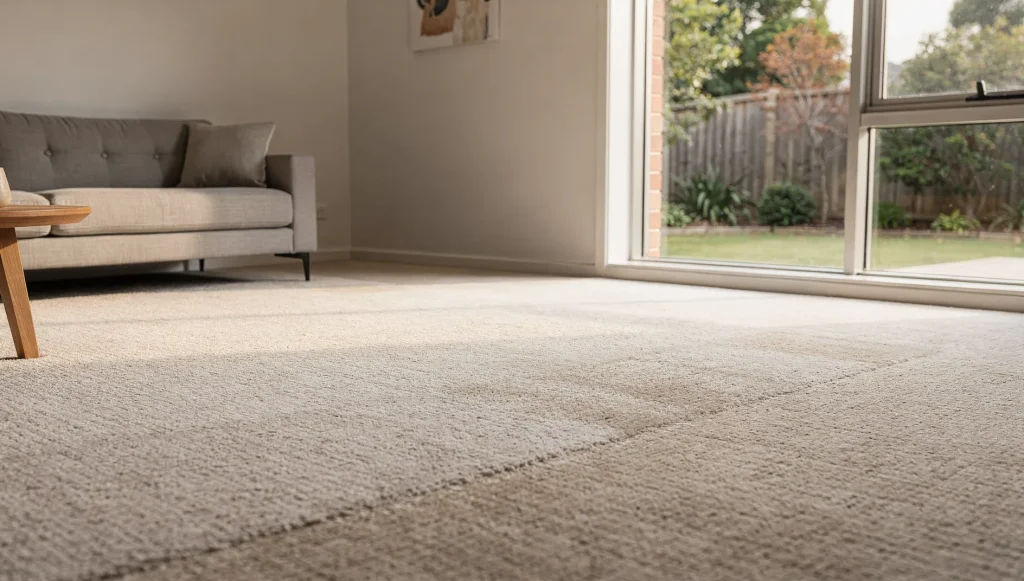
Have you ever cleaned a carpet thoroughly, only to find it looks dull or feels slightly stiff once it dries? Many Bunbury households notice this, and the usual suspects – foot traffic, old stains, cheap products – often get the blame. The real culprit is frequently the water itself. Hard water affects carpet cleaning results far more than most people realise, because the minerals dissolved in it interfere with how cleaning solutions work. As a local carpet cleaning company, we see the signs of regional water hardness in carpets across the region every week.
Prefer to watch or listen?
What Hard Water Actually Is
Hard water is simply water that carries a high level of dissolved minerals – mainly calcium and magnesium. These minerals are picked up as water moves through soils and rock before it reaches the supply. They are harmless to drink, but they change how water behaves when it meets soap and detergent.
Water hardness varies from place to place across the South West, depending on the source and the ground the water has travelled through. That is why one household may struggle with filmy, stiff carpets while a neighbour on a different part of the network sees fewer problems. The mineral content, not the cleaner, often explains the difference.
How Hard Water Affects Carpet Cleaning Results
When detergent meets hard water, the calcium and magnesium react with it. Instead of dissolving fully and lifting dirt, part of the detergent binds with the minerals and forms an insoluble soap film. This film is the same residue that leaves a ring in a kettle or a dull coating on glassware.
In carpet, that film settles deep into the fibres. It traps a layer of partially dissolved detergent and mineral deposit that ordinary rinsing struggles to remove. The result is a carpet that was cleaned, but never fully flushed clean. Over time these deposits build up and dull the appearance of the whole floor.
- Detergent that will not fully dissolve, so cleaning power is reduced.
- Mineral residue and soap film left behind in the fibre base.
- A sticky surface layer that attracts dirt back more quickly.
The Visible Signs of Mineral Residue
Hard water damage rarely looks dramatic. It shows up as a gradual loss of freshness that is easy to mistake for ageing carpet. The most common signs are carpets that feel stiff or crunchy underfoot, look flat and dull rather than clean, or feel slightly sticky when you run a hand across them.
The clearest giveaway is rapid re-soiling. If a carpet looks grubby again just weeks after cleaning, a residue film is almost certainly holding dirt to the fibres. This is also why DIY cleaning can make matters worse. Home machines often apply plenty of detergent but cannot rinse and extract thoroughly enough to carry the minerals back out. Each clean adds another layer instead of removing one.
Professional Solutions for Hard Water
Professional cleaning tackles hard water at the chemistry level rather than simply scrubbing harder. The aim is to stop minerals from binding with detergent in the first place and to flush any existing residue out of the fibres.
- Softened or treated water: reducing the mineral load before cleaning helps detergent dissolve and perform as intended.
- Correct detergent ratios: matching the solution to local hardness avoids both under-cleaning and leaving excess product behind.
- Thorough rinse and extraction cycles: high-powered hot water extraction flushes dissolved minerals and loosened film back out, rather than leaving them to dry in the pile.
It is this combination – treated water, balanced solution and a proper rinse cycle – that lifts the dull, filmy look hard water tends to leave. A single pass with too much detergent and too little rinsing does the opposite.
What Homeowners Can Do Between Professional Cleans
You can reduce the effect of hard water at home with a few simple habits. The goal is to avoid adding residue and to keep what is already there from building up.
- Use less detergent than the label suggests, not more – excess product is harder to rinse and leaves more film in hard water.
- Always follow any home cleaning with a plain-water rinse pass to help carry residue out.
- Blot spills promptly with water rather than reaching straight for strong spot cleaners.
- Vacuum regularly, since loose dirt bonds more readily to any residue already present.
- Allow carpets to dry fully and ventilate the room so minerals are not left sitting in damp fibres.
These steps will not remove an established mineral layer, but they slow its return between deeper professional cleans. If you are already thinking ahead to the cooler, damper months, our guide to preparing carpets for the winter wet season pairs well with sound water-conscious habits.
How Different Carpet Fibres React
Fibre type influences how visible hard water residue becomes. Synthetic carpets such as nylon and polyester tend to hold mineral film on the surface, where it shows as dullness and attracts dirt. Dense or cut-pile constructions can trap residue deeper and feel stiffer once it dries.
Natural fibres like wool are more sensitive to both minerals and the solutions used to counter them. They need gentler, well-balanced cleaning and careful rinsing, because overly alkaline products or heavy residue can affect their softness and colour over time. Matching the method to the fibre is a key part of avoiding build-up, which is why professional cleaning assesses the material before choosing a solution.
Understanding local water conditions is central to achieving carpet cleaning results that actually last. The minerals in the South West supply quietly shape every clean, and the right combination of treated water, correct detergent ratios and thorough extraction is designed specifically to counter them. When the chemistry is handled properly, carpets come up genuinely clean – soft, fresh and free of the dull film that hard water leaves behind.